CLIB-Webinar: Scaling Bioprocesses – Review
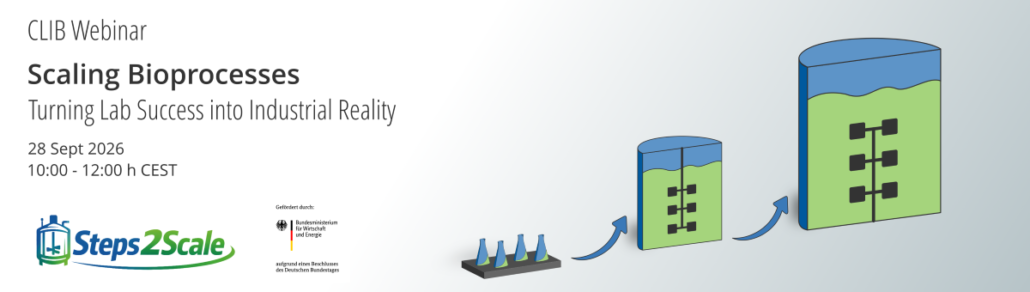
With nearly 190 participants, CLIB’s webinar “Scaling Bioprocesses: Turning Lab Success into Industrial Reality” was a great success. The event brought together experts and stakeholders from across the industrial biotechnology sector to discuss how innovative bioprocesses can be efficiently and reliably scaled from laboratory research to industrial production. The webinar provided valuable insights into current challenges, emerging trends, and practical approaches for reducing risks and accelerating successful scale-up projects.
The webinar began by looking at the activities CLIB itself undertaking in the area of scale-up. The successful scaling up of bioprocesses is one of the key issues for many CLIB members and is consequently reflected in projects, whether through the actual scaling up of processes, preparatory work and support in establishing the necessary framework conditions, or through the effective networking of the right partners to take the necessary steps.
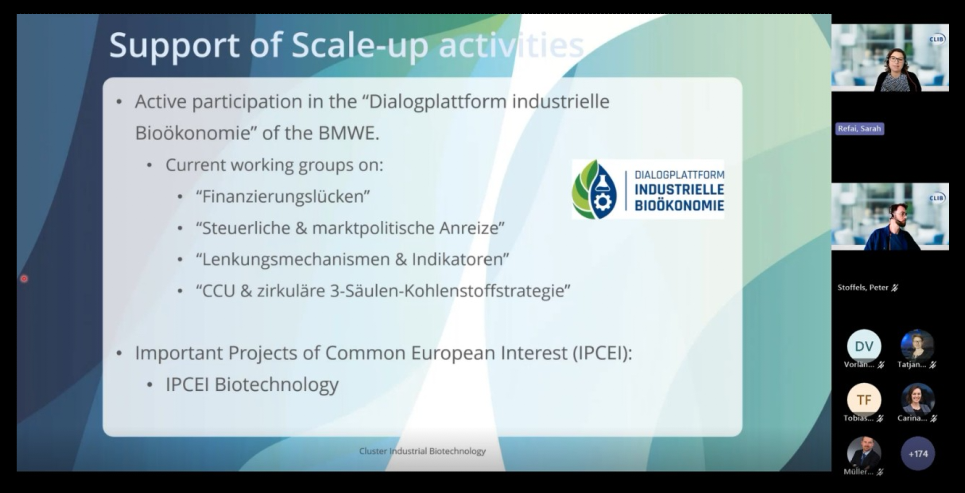
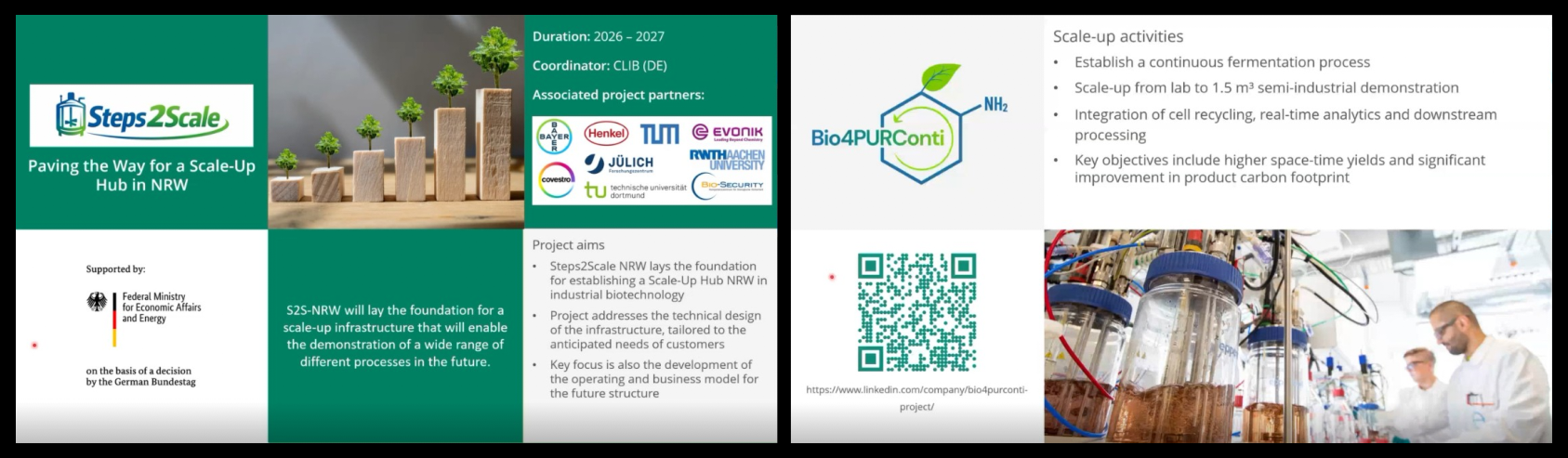
These activities are getting a dedicated discussion platform within the CLIB Membership as a new CLIB Focus Group “Scale-up” was launched in Oktober as a member exclusive service. In her introduction, Sarah Refai presented scaling-up examples from the CBE JU projects LIGNOFUN and COUNTLESS, in which not only are lignin depolymerisation processes being scaled up, but important product prototypes are also being developed. Furthermore, the recently started CBE JU project Bio4PURConti and the project Steps2Scale, funded by the Federal Ministry of Economic Affairs and Energy were highlighted that aim to develop the world’s first continuous production process for bio-based aniline and lays the foundation for establishing a Scale-Up Hub NRW in industrial biotechnology, respectively. Within Steps2Scale, CLIB is leading the efforts to conduct a needs analysis for a regional scale-up structure, on the basis of which an operational model is to be developed in close consultation with Bayer and other partners. In addition to these project activities, CLIB is involved in the BMWE’s ‘Industrial Bioeconomy Dialogue Platform’ and has played a key role in the discussions regarding the establishment of the IPCEI Biotechnology initiative.
The main part of the webinar featured four expert presentations, each highlighting a different perspective on the scale-up of bioprocesses:
- Frank Emde (Frings): Technical Aspects of Bioprocess Scale-Up – From Lab through Pilot to Industrial Scale
- David Vorländer (GEA): Designing the Scale-up Path – From Process Feasibility to Demo Readiness
- Tobias Fischer (Carpus+Partner): From Lab to Facility – Structural and Infrastructural Challenges in Integrating Scaled Biotech Processes
- Joern Viell (RWTH Aachen University): Scale-up and Process Design
Together, the presentations illustrated the multidisciplinary nature of bioprocess scale-up and provided participants with valuable insights from industrial, engineering, infrastructural, and academic perspectives. Discussions covered both established and emerging challenges along the scale-up journey, including strain selection, equipment choice, facility planning, process economics, energy demand, and regulatory considerations.
A key takeaway was that there is no universal approach to scaling bioprocesses. Depending on the technology, product, and business case, challenges may require highly specialized technical solutions or a broader strategic and holistic perspective. The speakers demonstrated how successful scale-up depends on the interaction of many different disciplines and stakeholders throughout the development process.
The presentations sparked significant interest among attendees and led to a lively and highly interactive Q&A session. The questions raised by participants reflected the diverse challenges faced when moving bioprocesses from laboratory development towards commercial implementation.
Topics ranged from practical scale-up considerations, such as the transition from batch to continuous processing, the role of Process Analytical Technology (PAT) across different scales, and the distinction between pilot and demonstration facilities, to strategic questions concerning facility planning, brownfield versus greenfield developments, and the use of CDMOs during scale-up. Participants were also keen to explore emerging topics, including the application of artificial intelligence in process development and facility design, the potential future role of advanced sensing technologies, as well as the increasing importance of digitalization, modelling, and digital twins.
Additional discussions addressed analytical requirements during scale-up, purification strategies, certification and regulatory considerations, and how infrastructure and process design decisions can influence long-term project success.
We would like to sincerely thank our speakers for sharing their expertise, practical experience, and insights.